The New York Daily News selects "Documenting the Face of America" for top ten list (PBS).
"Documentary TV at its best, revisiting the photographers hired by the government in the 1930s to take a picture of America."
The year's best shows and TV moments
BY DAVID HINCKLEY
DAILY NEWS STAFF WRITER
Monday, December 29th 2008, 10:22 PM
It's easy and fun to dismiss all television as trash, and there's certainly enough junk so that after one or two Budweisers or Red Bulls, the argument looks tempting.
It's just not true. Here, in no particular order, are some of the best reasons to have watched TV this year.
Shows
1. "Mad Men" (AMC). So maybe the audience includes more critics than regular people. But this time the critics are right. A beautifully subtle show, rich in nuance, acted wonderfully, and every bit as much about today as it is about the 1960s.
2. "The Wire" (HBO). A complex, brilliant drama about people whose lives erase any easy notions of good and bad.
3. "In Treatment" (HBO). Maybe the best shrink drama ever, as Gabriel Byrne and a half-dozen clients shadowbox with one another and themselves.
4. "The Mentalist" (CBS). Proof the broadcast networks can still create solid entertainment with a simple premise: A man helps cops solve cases with his ability to observe.
5. "Friday Night Lights" (DIRECTV/ NBC). Yes, they're really old for high-school students. So what? The dramas of Dillon, Tex., are full of jagged edges, like life.
6. "30 Rock" Only inside the media biz is this show canonized. It's still the funniest sitcom on TV, and Alec Baldwin and Tina Fey are as good as advertised.
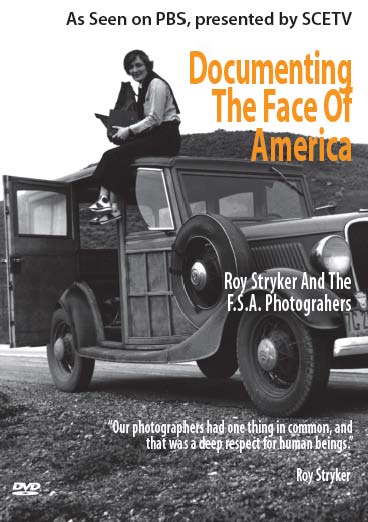
7. "Documenting the Face of America" (PBS). Documentary TV at its best, revisiting the photographers hired by the government in the 1930s to take a picture of America.
8. "iCarly" (Nickelodeon). A lot of shows for kids and 'tweens are surprisingly smart. This is about the smartest.
9. "In Plain Sight" (USA). Cable has a lot of TV's best dramas, and if this one isn't better than "Damages" or "Breaking Bad" or "Saving Grace," Mary McCormack as a cop with problems gives it an edge.
10. "Black Magic" (ESPN). Dan Klores visits basketball at black colleges in the days before integration. Poignant, funny, revealing.
http://www.nydailynews.com/entertainment/tv/2008/12/29/2008-12-29_the_years_best_shows_and_tv_moments.html
Thursday, January 1, 2009


Monday, December 22, 2008
A Short History of the Great Depression - NYT Article

The Great Depression was a worldwide economic crisis that in the United States was marked by widespread unemployment, near halts in industrial production and construction, and an 89 percent decline in stock prices. It was preceded by the so-called New Era, a time of low unemployment when general prosperity masked vast disparities in income.
The start of the Depression is usually pegged to the stock market crash of “Black Tuesday,” Oct. 29, 1929, when the Dow Jones Industrial Average fell almost 23 percent and the market lost between $8 billion and $9 billion in value. But it was just one in a series of losses during a time of extreme market volatility that exposed those who had bought stocks “on margin” – with borrowed money.
The stock market continued to decline despite brief rallies. Unemployment rose and wages fell for those who continued to work. The use of credit for the purchase of homes, cars, furniture and household appliances resulted in foreclosures and repossessions. As consumers lost buying power industrial production fell, businesses failed, and more workers lost their jobs. Farmers were caught in a depression of their own that had extended through much of the 1920s. This was caused by the collapse of food prices with the loss of export markets after World War I and years of drought that were marked by huge dust storms that blackened skies at noon and scoured the land of topsoil. As city dwellers lost their homes, farmers also lost their land and equipment to foreclosure.
President Herbert Hoover, a Republican and former Commerce secretary, believed the government should monitor the economy and encourage counter-cyclical spending to ease downturns, but not directly intervene. As the jobless population grew, he resisted calls from Congress, governors, and mayors to combat unemployment by financing public service jobs. He encouraged the creation of such jobs, but said it was up to state and local governments to pay for them. He also believed that relieving the suffering of the unemployed was solely up to local governments and private charities.
By 1932 the unemployment rate had soared past 20 percent. Thousands of banks and businesses had failed. Millions were homeless. Men (and women) returned home from fruitless job hunts to find their dwellings padlocked and their possessions and families turned into the street. Many drifted from town to town looking for non-existent jobs. Many more lived at the edges of cities in makeshift shantytowns their residents derisively called Hoovervilles. People foraged in dumps and garbage cans for food.
The presidential campaign of 1932 was run against the backdrop of the Depression. Franklin Delano Roosevelt won the Democratic nomination and campaigned on a platform of attention to “the forgotten man at the bottom of the economic pyramid.” Hoover continued to insist it was not the government’s job to address the growing social crisis. Roosevelt won in a landslide. He took office on March 4, 1933, with the declaration that “the only thing we have to fear is fear itself.”
Roosevelt faced a banking crisis and unemployment that had reached 24.9 percent. Thirteen to 15 million workers had no jobs. Banks regained their equilibrium after Roosevelt persuaded Congress to declare a nationwide bank holiday. He offered and Congress passed a series of emergency measures that came to characterize his promise of a “new deal for the American people.” The legislative tally of the new administration’s first hundred days reformed banking and the stock market; insured private bank deposits; protected home mortgages; sought to stabilize industrial and agricultural production; created a program to build large public works and another to build hydroelectric dams to bring power to the rural South; brought federal relief to millions, and sent thousands of young men into the national parks and forests to plant trees and control erosion.
The parks and forests program, called the Civilian Conservation Corps, was the first so-called work relief program that provided federally funded jobs. Roosevelt later created a large-scale temporary jobs program during the winter of 1933–34. The Civil Works Administration employed more than four million men and women at jobs from building and repairing roads and bridges, parks, playgrounds and public buildings to creating art. Unemployment, however, persisted at high levels. That led the administration to create a permanent jobs program, the Works Progress Administration. The W.P.A. began in 1935 and would last until 1943, employing 8.5 million people and spending $11 billion as it transformed the national infrastructure, made clothing for the poor, and created landmark programs in art, music, theater and writing. To accommodate unions that were growing stronger at the time, the W.P.A. at first paid building trades workers “prevailing wages” but shortened their hours so as not to compete with private employers.
Roosevelt’s efforts to assert government control over the economy were frustrated by Supreme Court rulings that overturned key pieces of legislation. In response, Roosevelt made the misstep of trying to “pack” the Supreme Court with additional justices. Congress rejected this 1937 proposal and turned against further New Deal measures, but not before the Social Security Act creating old-age pensions went into effect.
Brightening economic prospects were dashed in 1937 by a deep recession that lasted from that fall through most of 1938. The new downturn rolled back gains in industrial production and employment, prolonged the Depression and caused Roosevelt to increase the work relief rolls of the W.P.A. to their highest level ever.
Hitler’s invasion of Poland in September 1939, following Japan’s invasion of China two years earlier and the continuing war there, turned national attention to defense. Roosevelt, who had been re-elected in 1936, sought to rebuild a military infrastructure that had fallen into disrepair after World War I. This became a new focus of the W.P.A. as private employment still lagged pre-Depression levels. But as the war in Europe intensified with France surrendering to Germany and England fighting on, ramped up defense manufacturing began to produce private sector jobs and reduce the persistent unemployment that was the main face of the Depression. Jobless workers were absorbed as trainees for defense jobs and then by the draft that went into effect in 1940, when Roosevelt was elected to a third term. The Japanese attack on Pearl Harbor in December 1941 that started World War II sent America’s factories into full production and absorbed all available workers.
Despite the New Deal’s many measures and their alleviation of the worst effects of the Great Depression, it was the humming factories that supplied the American war effort that finally brought the Depression to a close. And it was not until 1954 that the stock market regained its pre-Depression levels.
By Nick Taylor is the author of “American-Made,” a 2008 history of the Works Progress Administration.
http://topics.nytimes.com/top/reference/timestopics/subjects/g/great_depression_1930s/index.html?inline=nyt-classifier&&&#
Poverty's Palette
The Depression, in Kodachrome: photographs from the Farm Security Administration and the Office of War Information, 1939-1943.
Monday, December 1, 2008
Film looks behind the lenses - By The Daily Progress Staff
The Virginia Film Society is looking at the photographers behind the iconic photographs of New Deal-era America.
“Documenting the Face of America: Roy Stryker and the FSA/OWI Photographers,’’ at 7 p.m. Tuesday at Vinegar Hill Theatre, is narrated by Julian Bond, a civil rights leader and University of Virginia history professor.
Jeanine Butler’s film explores the work of the still photographers — including Gordon Parks, Dorothea Lange, Russell Lee, Walker Evans, Marion Post Wolcott and Jack Delano — who captured images of everyday Americans in programs under the Farm Security Administration — Office of War Information. Stryker led the office during the Depression. During the 1930s and early 1940s, the photographers traveled the country to document the lives of Americans of all walks of life.
Butler has more than 15 years’ experience writing and producing films for PBS, the Discovery Channel, the Learning Channel, the National Science Foundation and the National Geographic Channel.
The screening ends the film society’s fall season.
Membership in the film society is $60, $50 for students and seniors, and includes admission to screenings, one free pass to Regal Cinemas, $2 off Mondays at Sneak Reviews and $6.50 Tuesday movies at Vinegar Hill.
Tickets are $9, free to film society members, and can be purchased half an hour before the screening. For details, call 982-5277.
http://www.dailyprogress.com/cdp/entertainment/movies/article/film_looks_behind_the_lenses/31961/
Wednesday, September 3, 2008
Virginia Film Society Screening - Tuesday December 2, 2008 7:00 PM: "Documenting the Face of America:..."
"Documenting the Face of America: Roy Stryker and the FSA/OWI Photographers" with director Jeanine Butler
Narrated by Julian Bond, this documentary brings to life the remarkable stories behind the legendary group of New Deal-sponsored photographers who traversed the country in the 1930s and early '40s, chronicling the lives of Americans --- rich and poor, urban and rural, black and white --- to create one of the most astonishing documentary portraits of America ever compiled. The film features the personal vision and the struggles experienced by photographers Gordon Parks, Dorothea Lange, Russell Lee, Walker Evans, Marion Post Wolcott and Jack Delano, who created some of the most iconic images in documentary history.
http://www.vafilm.com/film-society/
Date and Time Tuesday December 2, 2008
7:00 PM (EST)
Narrated by Julian Bond, this documentary brings to life the remarkable stories behind the legendary group of New Deal-sponsored photographers who traversed the country in the 1930s and early '40s, chronicling the lives of Americans --- rich and poor, urban and rural, black and white --- to create one of the most astonishing documentary portraits of America ever compiled. The film features the personal vision and the struggles experienced by photographers Gordon Parks, Dorothea Lange, Russell Lee, Walker Evans, Marion Post Wolcott and Jack Delano, who created some of the most iconic images in documentary history.
http://www.vafilm.com/film-society/
Date and Time Tuesday December 2, 2008
7:00 PM (EST)
| Directions | Vinegar Hill Theater 220 Market St. Charlottesville, VA 22902 |
|---|---|
| Event Web Site | Event Web Site |
| Contact Information | Email: info@vafilm.com |
Monday, August 18, 2008
New York Times - Recalling a Mission to Capture an Era’s Misery
Recalling a Mission to Capture an Era’s Misery
“Migrant Mother,” Dorothea Lange’s image of a weathered, grimy Depression-era woman in California surrounded by her children, is one of the most famous photographs of the 20th century, as is “Fleeing a Dust Storm,” Arthur Rothstein’s shot of a farmer and his two young sons in the Oklahoma Dust Bowl whipped by the wind, a shack in the background.
Skip to next paragraph 

Library of Congress Prints and Photographs Division
Arthur Rothstein’s “Fleeing a Dust Storm” is featured in “Documenting the Face of America,” Monday on most PBS stations. More Photos »
Multimedia

Library of Congress Prints and Photographs Division
Dorothea Lange’s “Migrant Mother” introduced one segment of America to another. More Photos >
The politics and the photographers who shaped those images under the auspices of the federal Farm Security Administration come to life in “Documenting the Face of America: Roy Stryker and the F.S.A./O.W.I. Photographers,” an hourlong documentary on most PBS stations Monday night. The film shows how Mr. Stryker turned a small government agency’s New Deal project to document poverty into a visual anthology of thousands of images of American life in the 1930s and early ’40s that helped shape modern documentary photography; more than 160,000 are now at the Library of Congress.
Before television or the Internet, when many Americans lacked even a radio, the photographs told stories that would have remained elusive to those out of eyeball range. Ms. Lange and Mr. Rothstein, along with celebrated figures like Walker Evans and Gordon Parks, used their cameras to preserve scenes of winding bread lines, dirty-faced families in front of their ramshackle farmhouses or in jalopies with their possessions piled high, as well as the stark “colored” signs of segregated public facilities and somber black children picking cotton.
Mr. Stryker’s group of photographers “introduced Americans to America” and an entire generation to “the reality of its own time and place in history,” Mr. Stryker says in an interview heard on the program, which is narrated by Julian Bond, chairman of the N.A.A.C.P.
“I wanted to introduce a new generation to some of these photographs and the amazing stories that went with them,” said Jeanine Isabel Butler, who wrote and directed the film and produced it with her husband, Alastair Reilly, and her sister, Catherine Lynn Butler, in association with South Carolina ETV. Jeanine Isabel Butler is a writer and producer of documentary and educational films for PBS, the Discovery Channel and the National Geographic Channel among others.
Ms. Butler said that she was captivated by the idea of how a small-agency bureaucrat like Mr. Stryker, who kept a tight rein on his photographers and constantly wrangled more money for his work, managed to remain idealistic. Her team began working on the film in 2000, she said, and scored a coup along the way by interviewing Mr. Parks, one of the country’s most celebrated photographers, who died in 2006 at 93.
“I feel like some of the issues we were facing then continue to be issues we as a society face,” Ms. Butler said. “There are still racial and class differences that can inspire a whole new generation of filmmakers, artists and photographers to look and begin to capture. But it’ll never be a big government project again.”
F. Jack Hurley, professor emeritus of history at the University of Memphis and author of a book on Mr. Stryker, who died in 1975, said in an interview that “Documenting the Face of America” helped put a few dozen widely reproduced Depression-era photographs into a broader context. Mr. Hurley, who appears throughout the documentary, said it also showed that the photographs, now celebrated, were once denounced in some quarters as the Roosevelt administration’s political propaganda, meant to win favor for some of his New Deal initiatives.
“What we think of as social documentary, it starts here,” Mr. Hurley said in an interview. “Stryker started out showing rural poverty to well-off urban people but broadened the file to include the middle-class and even farmers faring well.” Mr. Stryker gave questions to the photographers to serve as guidelines for their work, Mr. Hurley said: What do people in small-town Texas do on a Saturday afternoon? How do people in Mississippi use their porches?
“You wind up with a nicely balanced portrait of America in the ’30s,” he said.
Mr. Stryker, heard on screen in a 1975 audio interview with Mr. Hurley, says he quickly realized that farmers in every area of the country were suffering. “The picture began to be the thing of my life,” he says. “The photograph was the way to reach the people. Somehow, some way, I wanted life in the pictures.”
“Documenting the Face of America” includes excerpts from Mr. Stryker’s letters and interview transcripts, and excerpts from the diaries and shooting scripts belonging to him and the photographers. It is chock-full of the most famous photographs of Ms. Lange and Mr. Rothstein, as well as Mr. Parks and Mr. Evans, Jack Delano, Russell Lee, Marion Post Wolcott, Ben Shahn and others.
Mr. Stryker, a World War I veteran and assistant professor of economics at Columbia University, went to work for the federal government in the summer of 1935, when the country was in the grip of the Great Depression. He directed the historical unit of the Resettlement Administration (later the Farm Security Administration). In the ’40s his photography unit was assigned to the Office of War Information, or O.W.I.
The initial assignment of the historical unit was to use photographs to try to persuade Congress that thousands of dispossessed farm families were in desperate need of government assistance.
Mr. Stryker had grown up on small dirt farm outside Montrose, Colo., and his father was “a prairie populist,” Mr. Hurley says in the film.
“Roy’s patriotism included the right to question the way things were done,” Mr. Hurley says in an on-camera interview. “And certainly by the 1930s he was very angry about the situation that poor farmers found themselves in and he really wanted to do something about it.”
Mr. Parks — whose work for Mr. Stryker produced “American Gothic,” the image of a black government cleaning woman standing in front of an American flag, a broom in one hand and a mop by her other side — talks about his first meeting with his boss soon after he arrived.
Mr. Stryker gave Mr. Parks an unusual assignment: leave the Farm Security Administration office at 14th Street and Independence Avenue and get lunch across the street. Then go across the street to a theater. There, in the heart of the capital, Mr. Parks found the “Whites Only” signs that barred his admission.
Mr. Parks, in an on-screen interview, recalls reporting his experiences to Mr. Stryker on his return to the office. “I said, ‘I think you know how it went.’ He says: ‘Yeah, I know how it went. Well, what are you going to do about it?’ I said: ‘I don’t know. What do I do about it?’ He said, ‘Well, what did you bring that camera down here for?’ ”
Although Mr. Stryker kept his photographers together through various political challenges, World War II changed everything, the film shows. His unit was moved to the Office of War Information, and he lost control of it. His photographers were asked to produce propaganda, like photographs that showed the supposedly fair treatment of the Japanese-Americans interned in wartime camps. But before resigning in 1943 Mr. Stryker appealed directly to the White House to keep the thousands of photographs together at the Library of Congress, where most remain.
More Articles in Arts » A version of this article appeared in print on August 18, 2008, on page E1 of the New York edition.
http://www.nytimes.com/2008/08/18/arts/television/18pbs.html
http://www.nytimes.com/2008/08/18/arts/television/18pbs.html
Time - Blog
August 18, 2008 8:44
Documenting the Documentarians

Fleeing a Dust Storm, Arthur Rothstein, 1936/LIBRARY OF CONGRESS
I'm back from vacation. Over the break I took an advance look at a few upcoming books and tv programs, and I'll blog about a few of them in the weeks to come. The one you should know about first is Documenting the Face of America, a film about Roy Stryker and the F.S.A. photographers that airs tonight at 8 PM on PBS.
It was Stryker of course who assembled the government-sponsored team of photographers who brought back pictures of America during the Great Depression. Many of the men and women he recruited would become famous for the work they did with him. Walker Evans, Dorothea Lange, Gordon Parks, Russell Lee — all of them came out of Stryker's shop. He wasn't a photographer himself. He was a Columbia University economics instructor who had grown up on a small farm in Colorado. But in 1935 he went to Washington to work for the Resettlement Administration, a New Deal agency that had been formed to help farmers forced off their land by the Depression. (It later morphed into the Farm Security Administration — hence the FSA label.) Stryker was brought in to head the agency's "historical unit", an opportunity he ran with.
Once you get past the sometimes annoying musical soundtrack — cool jazz, Enya-style vocalizing, the occasional rock guitar — the PBS film, which was written and directed by Jeanine Isabel Butler, is pretty gratifying. But it has to cram a whole lot of history into a single hour, so it can only flick at some of the issues that surrounded Stryker's unique enterprise. His heart was in the right place every time. He wanted to expose the exploitation of migrant and tenant farmers, fight racism and show Americans the severe poverty in the almost hidden country of their own countryside, which is why the anti-New Deal wing of conservatives in Congress hated him. But the idea of a federal agency producing the definitive picture of a social crisis today would make a lot of people distinctly uneasy. Would anybody but George Bush want the "official" version of New Orleans after Katrina?
It also takes this film until the halfway point to explain how and where the FSA pictures were distributed and published, a crucial point that should have been cleared up much sooner. For the record, they were made freely available to book publishers, toured in exhibitions, and, what was probably most important, sent out to magazines and newspapers, which rarely had the resources to field their own photographers all around the country. In an era before television, the FSA images were, in their way, television.
And on television, the pictures look pretty smashing. We've seen some of these photographs many times but I've never seen them looking so clear and almost contemporary as they do in the beautiful high resolution transfers here. I only regret that the show doesn't give us the utterly modern-looking color pictures that the FSA started producing around 1939 and into the early 40s, when it was absorbed (and basically dissolved) into the War Information Office. You can find those in Bound for Glory, a really fascinating book published four years ago by Abrams and the Library of Congress, which is where the FSA photo collection now resides. Check it out.
Meanwhile, there's a website about the PBS show here.
http://time-blog.com/looking_around/2008/08/documenting_the_documentarians.html
Boston Globe: A revealing look at Americans through photographs
A revealing look at Americans through photographs
By Mark Feeney Globe Staff / August 18, 2008
With all due respect to our Olympians, the real Team USA's achievements can't be seen this week on NBC and its various cable networks live and on tape from Beijing. Instead, you have to go online, to lcweb2.loc.gov/ammem/fsowhome.html.
That's where you can find the more than 160,000 images taken by a small band of photographers who worked for the Farm Security Administration and Office of War Information between 1935 and 1943. They're the real Team USA - Walker Evans, Dorothea Lange, Ben Shahn, Russell Lee, Gordon Parks, to name just the most famous. The images they captured constitute the greatest work of public art in this nation's history: something all Americans can savor, take pride in, and even now, seven decades later, be moved by.
Although the story behind the FSA photographers has often been told, too few Americans are aware of it. Tonight it receives a slick and unsatisfying treatment in "Documenting the Face of America: Roy Stryker and the FSA/OWI Photographers" on Channel 2.
One of Franklin D. Roosevelt's more controversial New Deal programs, the Resettlement Administration was part of the Agriculture Department. It promoted on a small scale the relocation of tenant farmers, sharecroppers, and other rural poor. To calm conservatives, the administration's name soon became the more anodyne "farm security." In a further courting of public opinion, photographers were hired and sent out to record the conditions the FSA was seeking to remedy. Later their brief was expanded to photographing all of contemporary American society. The result was a visual archive of staggering depth and emotional richness.
"There's never really been anything else like it," the historian F. Jack Hurley says in the documentary. "And I think there never will be anything else like it." He's one of several talking heads who appear. Others include Parks, who died in 2006; Shahn's widow, Bernarda; and the photographer William Christenberry, a friend of Evans's. The narrator is Julian Bond.
Hurley's surely right. There's the sheer magnitude of what the FSA photographers accomplished. You can see it for yourself at the Library of Congress website. There's also the incongruity of the fact that the man behind it wasn't a photographer or curator but a onetime Columbia University economist. In fact, Roy Stryker's indifference to aesthetic concerns drove Evans, the FSA's star, to resign. Yet it also meant he was willing to take chances on little-known or untried photographers - chances that paid off many times over. Publicity (for the FSA) was what Stryker was after, not art. The miracle is that he got both.
The FSA photographers' images lay at the intersection of art, documentation, and propaganda. Anyone who has seen Lange's "Migrant Mother," which some have called the most famous photograph of the last century, or Evans's images of Alabama sharecroppers, which appear in James Agee's "Let Us Now Praise Famous Men," know how brilliantly they and their colleagues succeeded at all three tasks. The passage of time has softened and obscured the ideological thrust of much of the work - but that it was propagandistic there should be no doubt. Propaganda in a noble cause is still propaganda.
One reason these images endure is their visual chasteness. They don't hector and emote. The shame of "Documenting the Face of America" is that it doesn't trust its material. Bond's narration keeps telling the viewer what to think. Images slide and flash across the screen. A synth-driven score calls attention to itself, sonic counterpart to the documentary's hyped-up graphics. It's as if somebody at a production meeting said, "Uh-oh, how are we going to get people to look at all these still pictures in black and white?" The way you get people to look at them - or at least it is when they're this good - is just show them.
Mark Feeney can be reached at mfeeney@globe.com.

© Copyright 2008 Globe Newspaper Company.
http://www.boston.com/ae/tv/articles/2008/08/18/a_revealing_look_at_americans_through_photographs/
http://www.boston.com/ae/tv/articles/2008/08/18/a_revealing_look_at_americans_through_photographs/
Subscribe to:
Posts (Atom)